Everything your child needs, under one roof.
Super Smiles is a pediatric dental office in Harrison, Arkansas, and for most families across the region we are simply their kids dentist. Most children's practices refer out for orthodontics, complex restorations, and treatment that needs sedation. We do not. A pediatric specialist and a general dentist work here under the same roof and from the same chart, which means fewer referrals, fewer lost records, and one plan that carries from the first tooth through age 19.
The cheapest cavity is the one that never happens.
Most of what we do is designed to keep your child off the rest of this page. When it works, they end up on our wall instead.
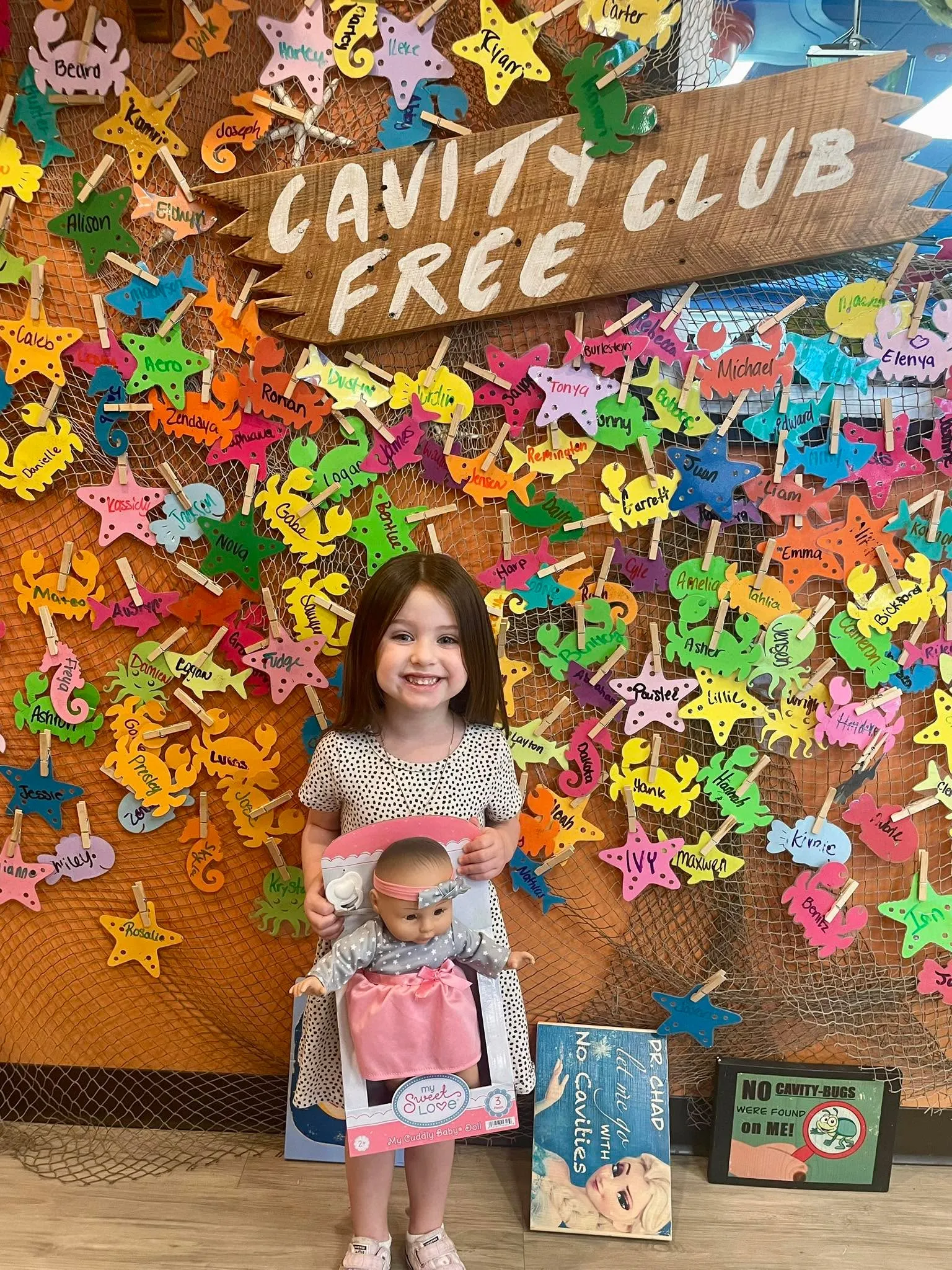 The Cavity Free Club wall
 Exams and cleanings
A full exam and cleaning about every six months, for toddlers through teens. We check for decay you cannot see or feel, look at the gums, and clean and polish away what a toothbrush leaves behind.
Fluoride varnish
A few minutes in the chair. It prevents decay and slows plaque from hardening on the enamel. How often your child needs it depends on their risk, not the calendar.
Sealants
A thin resin coating bonded into the deep grooves of the back teeth, where bristles cannot reach. We place them on permanent molars as they erupt, when those teeth are most cavity prone.
Silver diamine fluoride
A brush on treatment that stops active decay without a drill. Useful for very young children, for teeth that are hard to reach, and to stabilize a tooth while we plan treatment.
Mouthguards and nightguards
Custom sports guards for any full contact sport, with or without braces. And if your child wakes with jaw pain or you hear grinding at night, a soft nightguard prevents years of wear.
Due for a checkup?
Six months goes quickly. We will find you a time that works around school.
Call (870) 741-4746Radiographs
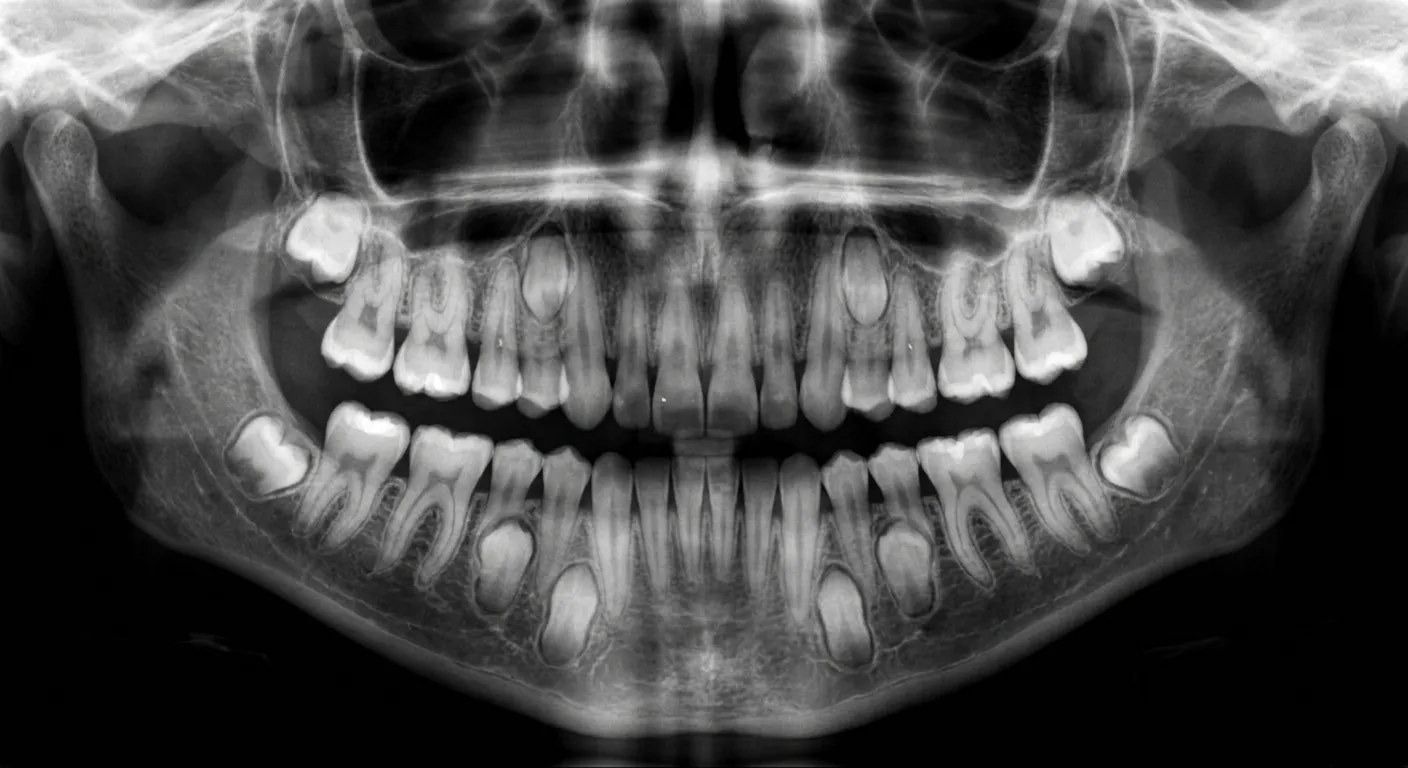
We watch teeth you will not see for years.
Bitewings find decay hiding between teeth. A panoramic image shows permanent teeth still forming in the jaw, the ones that decide whether your child needs braces at twelve. We take them when they will change what we do, not on a fixed schedule.
Keeping a damaged tooth working.
The goal is to keep the tooth doing its job until it is meant to come out, whether that is next year or for life.
No amalgam. Ever.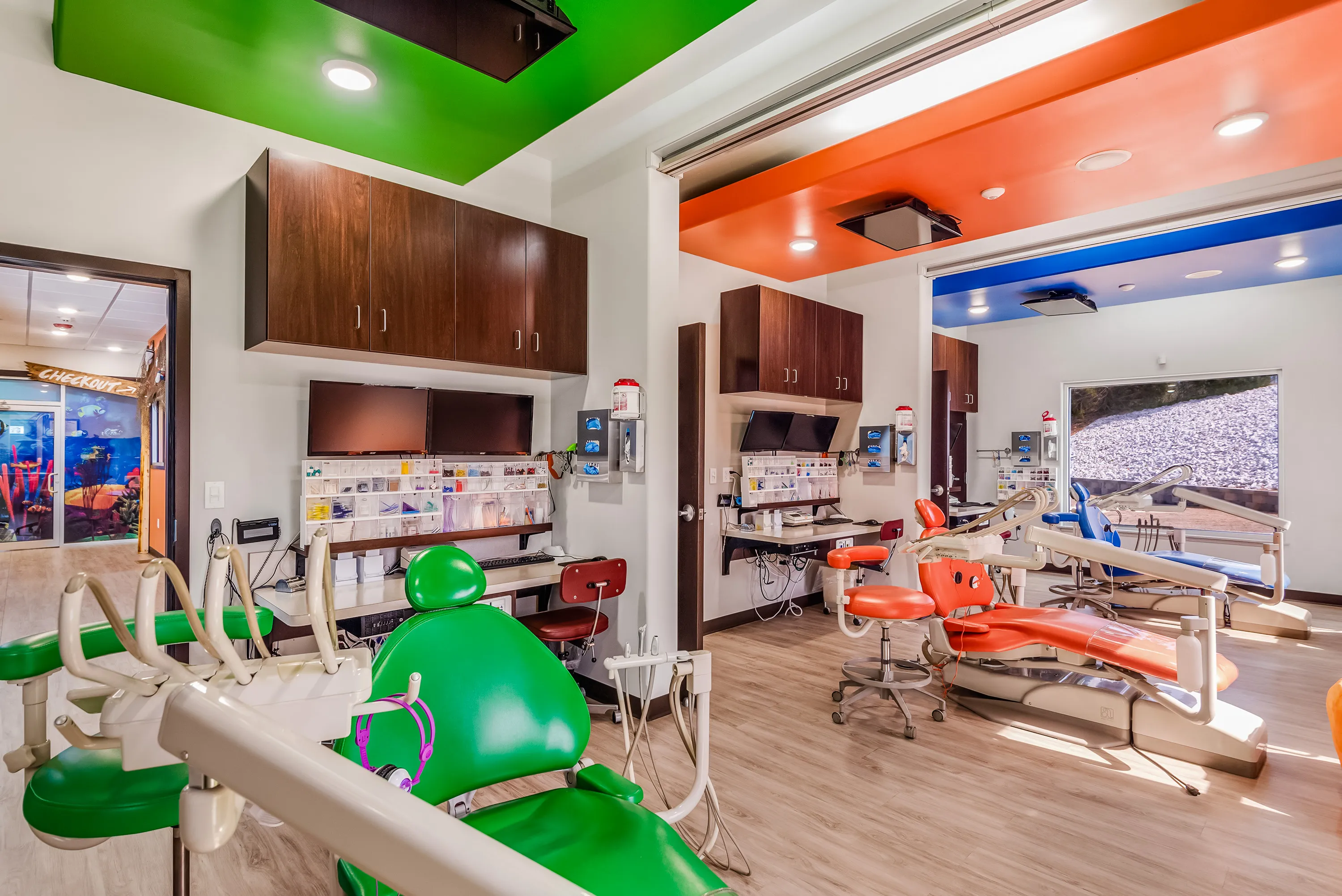
Tooth colored fillings
We do not use amalgam or silver fillings. Every filling is tooth colored composite, and we offer BPA free and fluoride free materials for families who want them.
Stainless steel crowns
A durable cap covering the whole tooth. This is the standard of care from the American Academy of Pediatric Dentistry when decay is extensive or several surfaces are involved and a filling will not hold.
White coated crowns
Stainless steel crowns with a tooth colored coating, for when durability matters but the tooth shows when your child smiles.
Zirconia crowns
Prefabricated ceramic crowns, tooth colored the whole way through, placed on both baby and permanent teeth. The most natural looking option we offer.
3D printed resin crowns
Crowns printed to fit the individual tooth, for baby or permanent teeth. A newer option that lets us match the shape more precisely than a prefabricated crown.
Custom white space maintainers
When a baby tooth is lost early, neighboring teeth drift into the gap and crowd the permanent tooth trying to come in. Ours are custom made and tooth colored rather than visible metal.
The harder appointments, handled here.
This is the work most pediatric offices send somewhere else. Keeping it in house means the person doing it already knows your child.
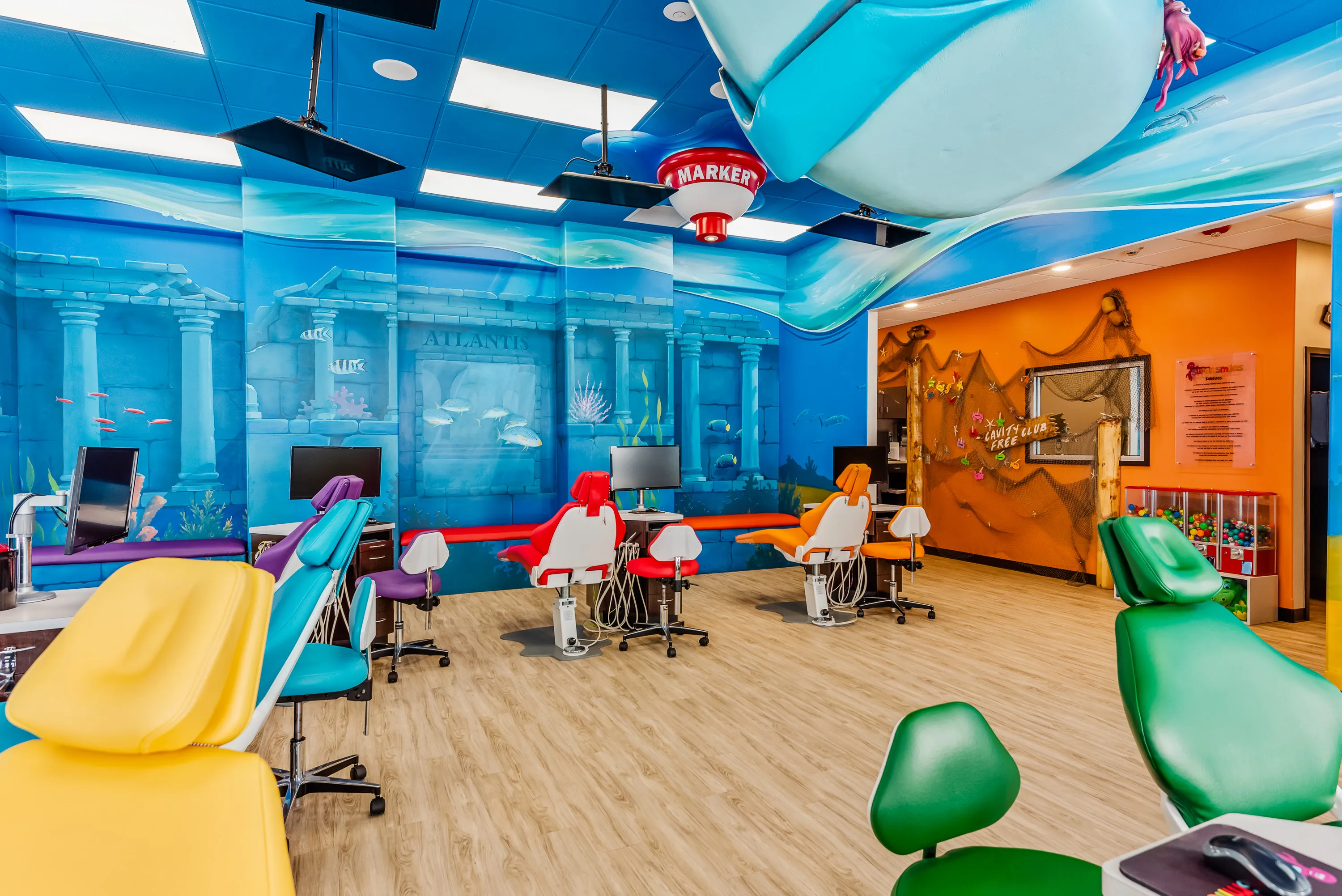
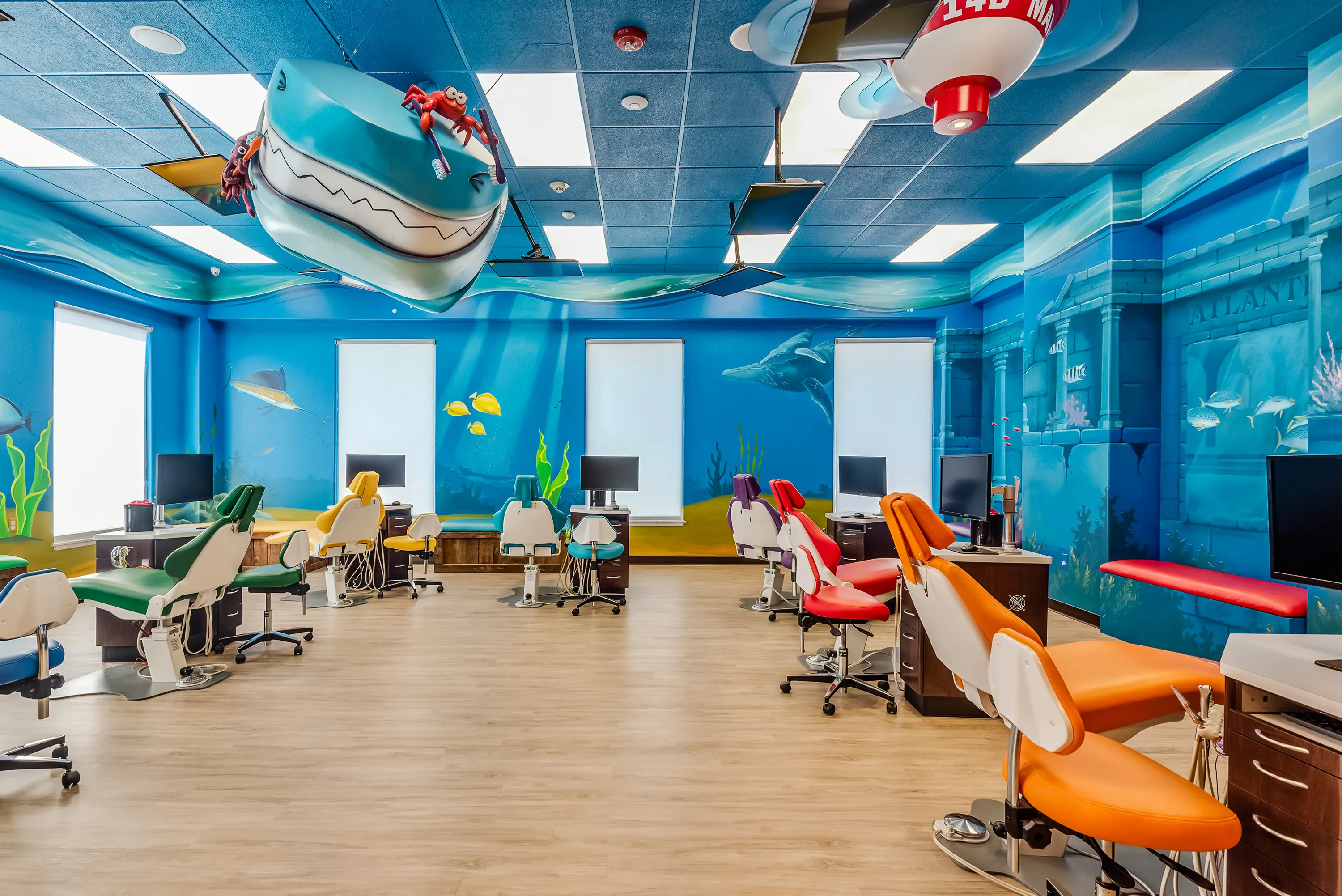
Serious care, in a room built to feel safe.
Pulpotomy
When decay reaches the nerve of a baby tooth, removing the affected pulp and sealing the tooth keeps it in place until it is ready to come out on its own. Far more common in children than a full root canal.
Root canals
On permanent teeth, we treat the nerve and save the tooth rather than lose it. We clean and seal the inside, then usually crown it so it does not fracture later.
Extractions
Sometimes a tooth has to come out: a baby tooth whose roots will not release, decay that threatens the teeth around it, or crowding that orthodontics needs resolved.
Wisdom teeth
We evaluate wisdom teeth as they develop and remove them here when they are impacted or have no room, including surgical removal, rather than sending your teenager elsewhere.
Tongue tie and lip tie release
A restrictive tongue or lip attachment can interfere with feeding in infancy and speech later on. We screen for it from the very first visit and release it here when it is causing a problem.
Same day emergencies
Knocked out tooth, broken bracket, swelling, or pain that started overnight. Call us. We keep room in the schedule for children who are hurting.
Call (870) 741-4746A scary visit at six becomes a lifetime of avoiding us.
We would rather spend the extra time now. Most children need far less than parents expect.
Most visits
Nitrous oxide
Laughing gas takes the edge off for a nervous child and wears off within minutes of the mask coming away. It is by far the most common thing we use, and most children need nothing more.
Longer appointments
Oral sedation
For longer appointments or children who cannot settle with nitrous alone, a medication taken by mouth before the visit. You will get written pre visit instructions in advance.
When the chair will not work
Hospital dentistry
For children who cannot safely be treated in a dental chair, we provide care under general anesthesia in a hospital setting, with an anesthesiologist monitoring throughout.

Hospital dentistry may be right for your child
Some children cannot be treated safely in a dental chair, and pushing through it is how a lifelong fear gets made. Treating everything at once, asleep, in a hospital, is often the kinder path.
If that sounds like your child, say so when you call. We will talk it through before anyone is in a chair.
- Physical, developmental, or emotional needs that make holding still unsafe
- A severe gag reflex
- Complex medical conditions that make office treatment unsafe
- Difficulty getting numb, or a known allergy to local anesthetic
- Extensive treatment better completed in one visit than across many
The braces decision, made by someone who was already there.
Because we treat through age 19, nobody is meeting your child for the first time at twelve and guessing.
Someone who has watched your child’s jaw develop since their first tooth.



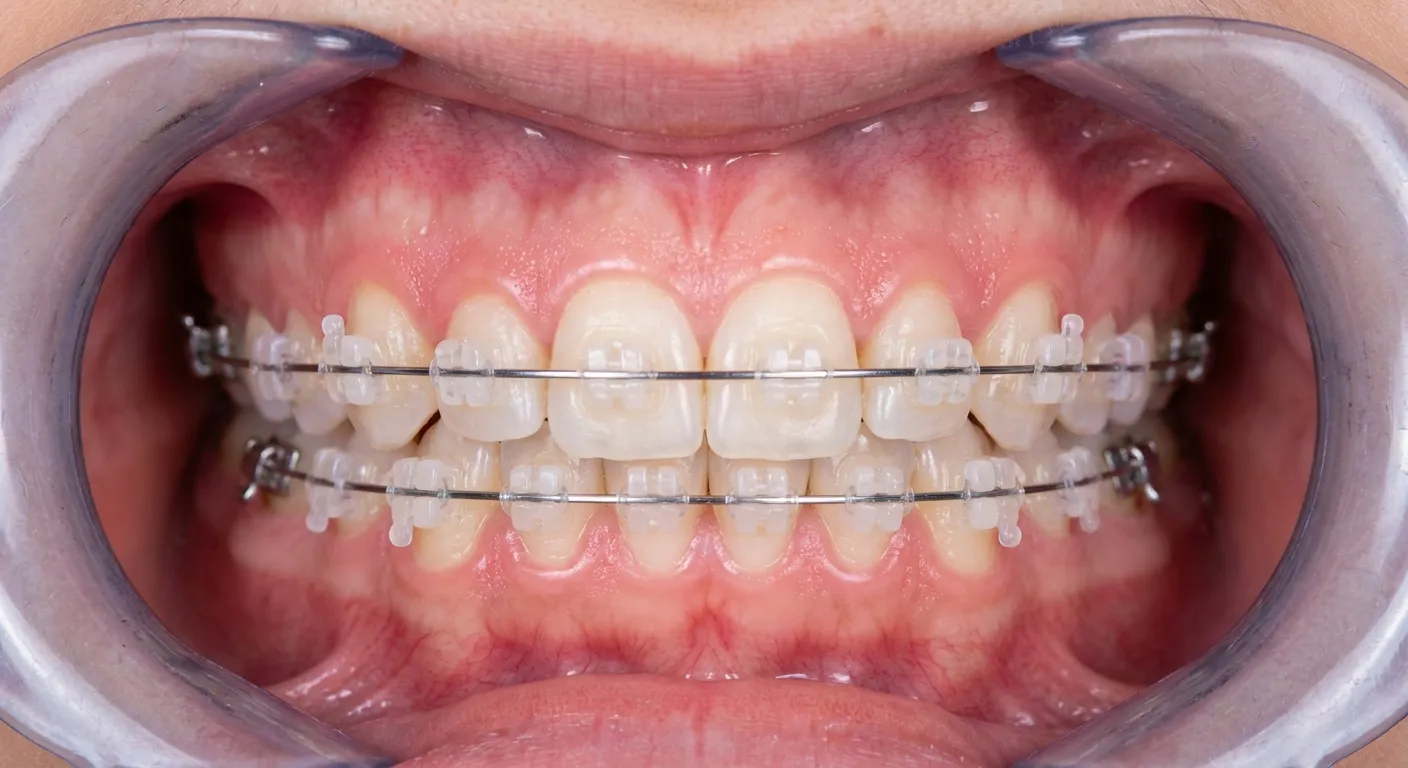
Age 7 evaluation
Every patient gets a documented orthodontic evaluation at age seven, as the American Association of Orthodontists recommends. It is the window where small interventions prevent big ones.
Traditional metal braces
The most common option and far more comfortable than they used to be. Colored elastics are your child’s call, and they usually have opinions.
Self ligating braces
Same materials as traditional braces, but a built in clip replaces the elastics. Less friction on the tooth and fewer adjustment visits.
Clear and ceramic braces
Less visible than metal and popular with older teens. They need more attention to hygiene, so we usually place them on the upper front teeth.
Clear aligners
Removable trays instead of brackets, for cases that suit them. Your teenager can take them out to eat and to brush, which makes hygiene through treatment much easier.
Retainers
Teeth move for life. We make and fit the retainer that holds the result, and replace it when it is lost or broken, which it will be.
Treatment usually runs one to three years depending on age and severity, and early interceptive treatment often shortens what is needed later. We will lay out the options and an honest estimate of the timeline before anything starts.
Most families here are covered. Many do not realize it.
We take Arkansas and Missouri Medicaid, the major private plans, and our own membership plan for families with no insurance at all. Call and we will check your benefits before you ever sit in a chair.
Covered means covered
If a service is covered by your child’s plan, you owe nothing at the visit. ARKids First-A has no co-pays.
Surprises come first
If something is not covered, you hear it from us before it is scheduled, not on the way out.
One plan, every family
Cash, private insurance, or Medicaid, the I-19 Pathway is the same pathway.
Arkansas Medicaid
Both ARKids First-A and ARKids First-B.

Missouri Medicaid
For families crossing the line from Branson and Taney County.
- MO HealthNet
-

-

-

Private insurance
The plans most families around Harrison carry.
-

-

-

- United Concordia
Do not see your plan? Call us anyway. We file with most carriers even where we are out of network, and we will tell you what your visit will actually cost before we schedule it.
The Super Smiles Dental Plan
Our own membership plan, for families with no dental insurance. You pay the practice directly. No deductible, no annual maximum, no waiting period, and no claim to file. Preventive visits are built in and everything else is discounted.
Ask what it would cost for your family. It is usually less than a plan you would buy on your own.
Paying over time
When a treatment plan is bigger than the month allows.

Healthcare financing with interest free options on qualifying balances.

Apply in about a minute at the front desk, with no hard credit check to see your options.
Tell us what your child needs. We will tell you what it costs.
One call is usually enough to know where you stand, what is covered, and when we can see them.